Country Balls: World War
- 4.6
- Rating
- 10.00M
- Installs
- Free
- Price
 Analysis by App-foxy
I went into Country Balls: World War expecting a light strategy game built around the familiar country-ball style, but I found that its real appeal is the small decisions made between battles. You control an army, choose how to approach each encounter, and try to win through planning rather than simply tapping as quickly as possible. That makes it a useful choice for players who want something more involved than a casual time-killer, without committing to the long sessions often associated with larger strategy games.
Developed by MAD PIXEL GAMES LTD, this free strategy game is aimed at Teen players and has already attracted more than ten million installs. Its average rating sits at 4.7 from roughly two hundred thousand ratings, which suggests that the basic formula connects with a large audience. I would not treat those figures as a guarantee that everyone will enjoy it, though. The game has a particular tone, a compact mobile structure, and a progression style that will suit some players much better than others.
What to consider before choosing it
I find it useful to decide whether the country-ball theme and compact battle planning are enough to keep me interested beyond the first few sessions. I’d also think about how much attention I want to give a mobile strategy game, since a distracted run can make its choices feel less rewarding. With those expectations in mind, the next question is whether its recurring play feels worthwhile over time.
You May Also Like

 Blood Strike: 2.5 Anniversary
Blood Strike’s Loadouts Turn Every Drop Into a Tactical Gamble
A close look at Blood Strike’s custom loadouts: how fast access to signature weapons reshapes its battle royale rhythm, rewards preparation, and narrows the gap between fights.

 Pandora - Music & Podcasts
Pandora’s Music Is Easy to Start, but Harder to Recover
Pandora’s strength is its low-effort path from a seed to a station. Its weak spot is how much confidence it asks you to place in connection, setup, and quiet recovery.

 8 Ball Pool
 Is Built on Rivalries, Rematches, and Routine
A close look at the rivalries, rematches, shared routines, and unanswered safety questions that turn a quick pool match into a persistent mobile community.

 Samsung Music
’s Quiet Strength Is Playing What You Already Own
Its reach comes less from spectacle than from dependable access to a personal library. That simplicity is both the app’s strongest retention engine and its ceiling.

 AccuWeather: Weather Radar
AccuWeather Review: A Quick, Clear Forecast for Everyday Decisions
For everyday plans, the best forecast is the one you can understand quickly. AccuWeather makes rain timing, radar, and local conditions easy to act on, with a few trade-offs.

 Hill Climb Racing
Why Hill Climb Racing Still Turns Crashes Into One More Run
A tiny car, a bumpy hill and one more upgrade: Hill Climb Racing keeps resurfacing because its simple chaos makes every near-miss feel personal.
More From Our News Desk



The best reason to try it
My first decision criterion is whether you enjoy making quick tactical choices with limited room for error. The game’s central idea is straightforward: direct your army, read the situation, and use logic and strategy to overcome the opposing force. The country-ball presentation keeps the subject matter playful, but the underlying experience still asks you to think about timing, positioning, and the consequences of a poor choice.
That balance is important. This is not the right pick if you want a deep historical war simulation with complex diplomacy, detailed logistics, or a huge map to manage. It is better understood as a mobile strategy game that turns battles into short decision-making exercises. I found it easiest to enjoy when I treated each encounter as a puzzle rather than expecting a full-scale command simulator.
How the visual style affects the experience
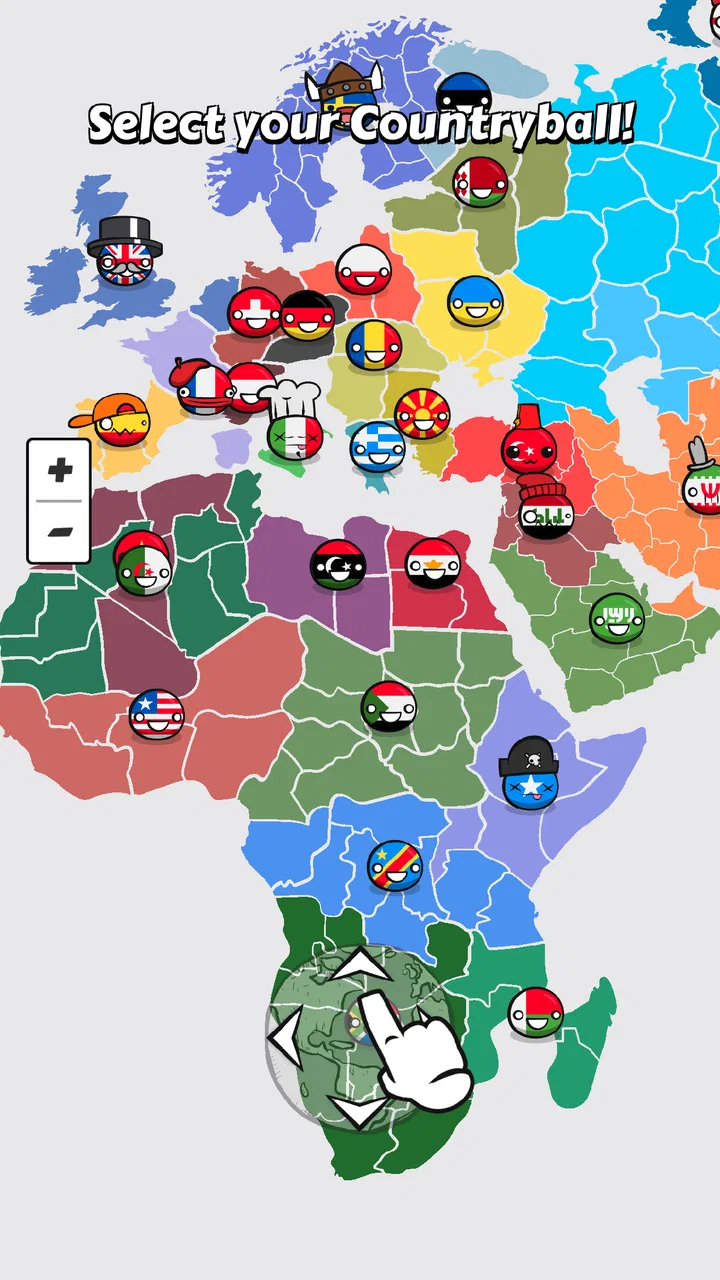
The country-ball theme gives the game an immediately recognizable personality. It makes the military setting feel less severe and helps the game stand apart from serious war titles that rely on realistic soldiers, maps, and equipment. For me, that lighthearted presentation made it easier to pick up for a few minutes without feeling as though I was entering a demanding campaign.
There is a trade-off, however. Players who prefer grounded visuals may find the style too cartoon-like, while fans of country-ball humor will probably see it as the main attraction. The presentation is not just decoration; it sets expectations for the entire experience. I would choose this over a realistic war game when I want accessible strategy with a playful identity, but not when I am looking for immersion or historical detail.
What the rating and audience suggest
The Teen content rating is worth considering before installing it for a younger player. The cartoon approach may make the game look harmless at first glance, but the theme still revolves around armies and battles. I would check the device’s content settings and make the decision based on the individual player rather than assuming that the simplified art makes it suitable for every age.
The large player base also means the game is not an obscure experiment with an uncertain audience. Still, popularity does not remove the need to ask whether its style matches your habits. If you usually abandon strategy games when the opening tutorial or early progression becomes repetitive, the number of installs will not change that experience. I recommend judging it by the type of decisions you enjoy, not by its visibility in the store.
A practical everyday scenario
I think the game works particularly well during a short break when I want something more engaging than endlessly scrolling. I can start an encounter, examine the situation, make a plan, and stop after a focused burst of play. That makes it a better fit for a commute, a waiting room, or a few minutes between tasks than a strategy title that requires a long uninterrupted session to make progress.
My useful habit is to avoid playing it while distracted. The battles may look simple, but rushing through a choice can turn a manageable situation into a frustrating loss. When I have only one hand free or my attention is divided, a purely casual game is often a better choice. When I can give the screen a little concentration, this one rewards me more than a game based only on reflexes.
Three decisions that improve the experience
First, I recommend pausing before committing to an obvious move. The most visible option is not automatically the strongest one, and the game is more satisfying when I treat the battlefield as a problem to read rather than a sequence of prompts to clear. That small change in attitude makes the strategy feel more deliberate.
Second, I use failed battles as information instead of immediately repeating the same approach. If a plan does not work, I ask whether I acted too early, overlooked the opposing force, or relied on a move simply because it looked powerful. This turns a loss into a quick lesson and prevents the progression from feeling like blind trial and error.
Third, I keep my sessions focused instead of trying to force a long play period. The game’s mobile format is one of its strengths, but it can become less enjoyable when I continue after I have stopped thinking carefully. Short, attentive sessions suit the design better than treating it like a marathon strategy campaign.
Where it stands out among mobile strategy games
The strongest feature is the combination of a recognizable theme and accessible tactical play. Many mobile strategy games either simplify their systems until decisions feel automatic or add so many layers that a new player needs considerable time before understanding what matters. This game sits closer to the approachable side while still asking me to use logic.
That makes it a good introduction for someone who likes the idea of strategy but does not want to begin with a complicated empire-management game. It can also serve as a change of pace for experienced players who want a lighter battle-focused option. I would not describe it as a replacement for a deep strategy computer game, but I do see its value as a more immediate alternative for mobile play.
The developer’s role in the game’s identity
MAD PIXEL GAMES LTD has given the title a clear visual hook instead of presenting it as another anonymous army game. That clarity matters on a phone, where many competing games can look similar at a glance. I knew what kind of mood to expect before playing, and the country-ball concept remained central to the experience rather than disappearing after the opening moments.
For my decision, that consistency is more important than technical ambition. I would rather play a focused game with a distinct personality than one that promises every possible strategy feature but feels interchangeable. The limitation is that players who want more serious command depth may eventually outgrow this format. Its identity is a strength, but it also defines the boundary of its appeal.
Where another category may fit better
If your priority is long-term empire building, a traditional 4X strategy game will probably be a better match. Those games usually focus more heavily on research, territory, resources, diplomacy, and extended planning. I would choose one of them when I want a campaign that develops over many decisions and gives me a broad world to manage.
If you mainly want immediate action, a real-time battle game may suit you more. Those titles place greater emphasis on quick reactions and continuous control, while this game’s appeal comes from thinking through the situation. Choosing an action-focused alternative is sensible when you find pauses, planning, or repeated tactical evaluation less exciting than direct movement and combat.
There is also a place for puzzle games as an alternative. If what you enjoy most here is the logic behind each encounter rather than the army theme, a pure puzzle title may offer cleaner problem-solving and fewer distractions. I prefer this game when the military framing and country-ball presentation add motivation, but I would switch categories if those elements started feeling like unnecessary decoration.
Who should skip it
I would skip this game if you are searching for a realistic war experience, a historically detailed campaign, or a highly social strategy environment. Its playful theme and compact structure point in a different direction. It is also not ideal for anyone who dislikes losing because of a rushed decision and then having to rethink the same situation.
Players who want a completely free experience with no temptation to spend should also think carefully. The game is free to download, but it includes in-app purchases priced from $2.99 to $4.99 per item. I did not view those purchases as a reason to reject the game automatically, yet the presence of optional spending changes how I would recommend it to someone trying to avoid all purchase prompts.
Understanding the cost of switching
Because the game is free, the financial cost of trying it is low. The more meaningful cost is time: learning how its battles expect you to think, becoming comfortable with its pacing, and deciding whether its progression is worth continuing. If you already enjoy it, moving from another mobile strategy game should feel relatively easy because the core habit of assessing a situation and choosing a plan transfers well.
Switching away can be just as reasonable. If you discover that you want deeper systems, changing to a larger strategy category will give you more complexity, but it will also demand more attention and longer sessions. If you move to an action game, you may gain immediacy while losing the thoughtful pauses that make this title distinctive. I would make the change based on the kind of attention I want to give, not simply on whether another game looks more impressive.
Version, device fit, and expectations
The current version is 0.4.23, and the game supports devices running Android 7.1 or later. That gives it a relatively broad starting point for Android users, although the actual feel will still depend on the phone’s screen, performance, and available storage. I would install it on the device where I normally play short games, then test how comfortable the controls and visual layout feel before deciding whether it deserves a permanent place there.
I also recommend keeping expectations realistic about updates and progression. A version number can change over time, but it does not tell me whether the game will match the content rhythm of a much larger strategy title. I judge it by the quality of the battles I can play now, the clarity of its decisions, and whether I remain interested after the novelty of the theme wears off.
My final recommendation
I recommend Country Balls: World War to players who want a free, approachable strategy game with a humorous visual identity and battles that reward careful choices. It is especially suitable for short sessions, casual strategy fans, and people who enjoy country-ball culture but still want more involvement than a basic arcade game provides.
I would not recommend it as a substitute for a deep war simulator, a full 4X campaign, or a reaction-heavy action game. Its strengths come from focus and accessibility, while its limitations come from that same compact design. The best way to approach it is to play thoughtfully, avoid treating every encounter as a button sequence, and decide early whether the balance between light presentation and tactical planning works for you.
For me, the game earns a place among mobile strategy options because it understands its own scale. It does not need to imitate a desktop war room to be enjoyable. If you want a quick strategic challenge wrapped in a distinctive country-ball world, I think it is worth trying. If you want a sprawling system that keeps unfolding for months, I would point you toward a different category before you invest your time.
FAQs for Country Balls: World War
01What is the main objective of Country Balls: World War?
Country Balls: World War is a strategy-based game where players control and manage a country ball to conquer territories and defeat opponents. The primary objective is to expand your nation’s influence by strategically deploying resources and engaging in battles, aiming to become the dominant force on the global map.
02Is Country Balls: World War free to play?
Yes, Country Balls: World War is free to download and play on both Android and iOS platforms. However, the game includes in-app purchases that offer various upgrades, customization options, and additional resources to enhance gameplay. Players can choose to make purchases, but it is not necessary to progress.
03What platforms support Country Balls: World War?
Country Balls: World War is available on both Android and iOS devices. It can be downloaded from the Google Play Store for Android users and the Apple App Store for iOS users. Ensure your device meets the minimum system requirements for optimal performance and compatibility.
04Does Country Balls: World War require an internet connection?
While you can access some features offline, Country Balls: World War is designed with online interactions in mind. An internet connection is required for multiplayer battles, accessing leaderboards, and participating in community events. For the best experience, a stable internet connection is recommended.
05How does the game handle player progression and levels?
In Country Balls: World War, players progress by winning battles, completing missions, and expanding their territories. As you advance, you gain experience points, unlock new levels, and earn rewards that can be used to upgrade your country ball’s abilities. Strategic planning is key to successful progression through the game’s levels.
Pros
- Engaging and humorous storyline.
- Simple controls suitable for all ages.
- Variety of countries to play with.
- Frequent updates with new content.
- Multiplayer mode enhances fun.
Cons
- Ads can be intrusive at times.
- Some in-app purchases are pricey.
- Occasional lag in multiplayer mode.
- Limited customization options.
- Soundtrack can become repetitive.

Country Balls: World War
Gallery